Most fabrication companies will happily drop a half-million dollars trying to shave ten minutes off their production time. They write massive CapEx checks for 12-kilowatt fiber lasers, multi-axis CNC press brakes, robotic welding cells, laser welding machines, Miller Dynasty set ups, and automated beam lines. Then they drop another two hundred grand on a massive new ERP system and sit in weekly management meetings trying to chase down a five percent labor overrun.
But here is the hard truth that nobody in the software industry wants to tell you: You almost never lose your margin on the shop floor.
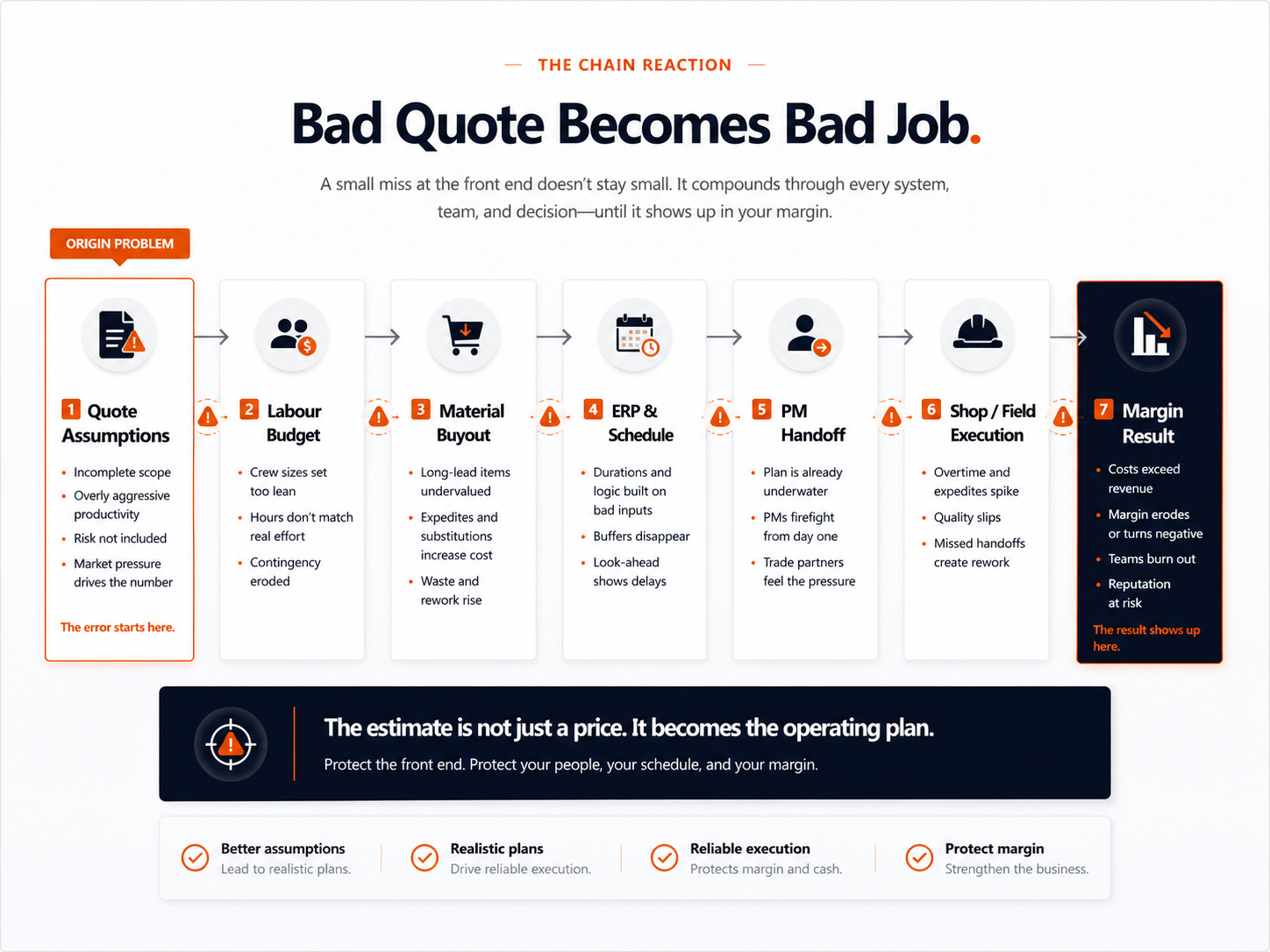
You lose it the exact second a weak quote becomes your production plan. A bad job is usually purchased before the steel is even ordered, and long before the first cut is ever made.
Before we talk about how to fix that, you should probably know exactly who you are listening to. I am not a software developer who decided to launch a tech startup, and I am definitely not a theoretical business consultant. I am a metal guy who figured out the math.
I've got over 50,000 hours in this trade, and over the last twenty-five years, I've pretty much lived in every corner of the industry. I actually started out painting. Then I spent my time under the welding hood, fitting steel on the floor, doing the layout, building stairs, mezzanines, handrails, bending square-to-rounds, and getting to know equipment intimately. Eventually, I moved into heavy 3D cad design, and from there, into the office. I’ve run operations, been involved in M&A, did sales, and led an estimating department for some highly complex structural, mechanical, and industrial fabrication and repair jobs.
I know what it smells like when a job goes sideways on the floor. I know exactly what it costs when a clean PDF drawing collides with the messy reality of the shop.
I built the FabProfit System because I simply got tired of watching incredibly talented fabrication shops lose their shirts on jobs they never should have bid, or give away their hard-earned margin simply because of a few undocumented blind spots at the estimating desk.
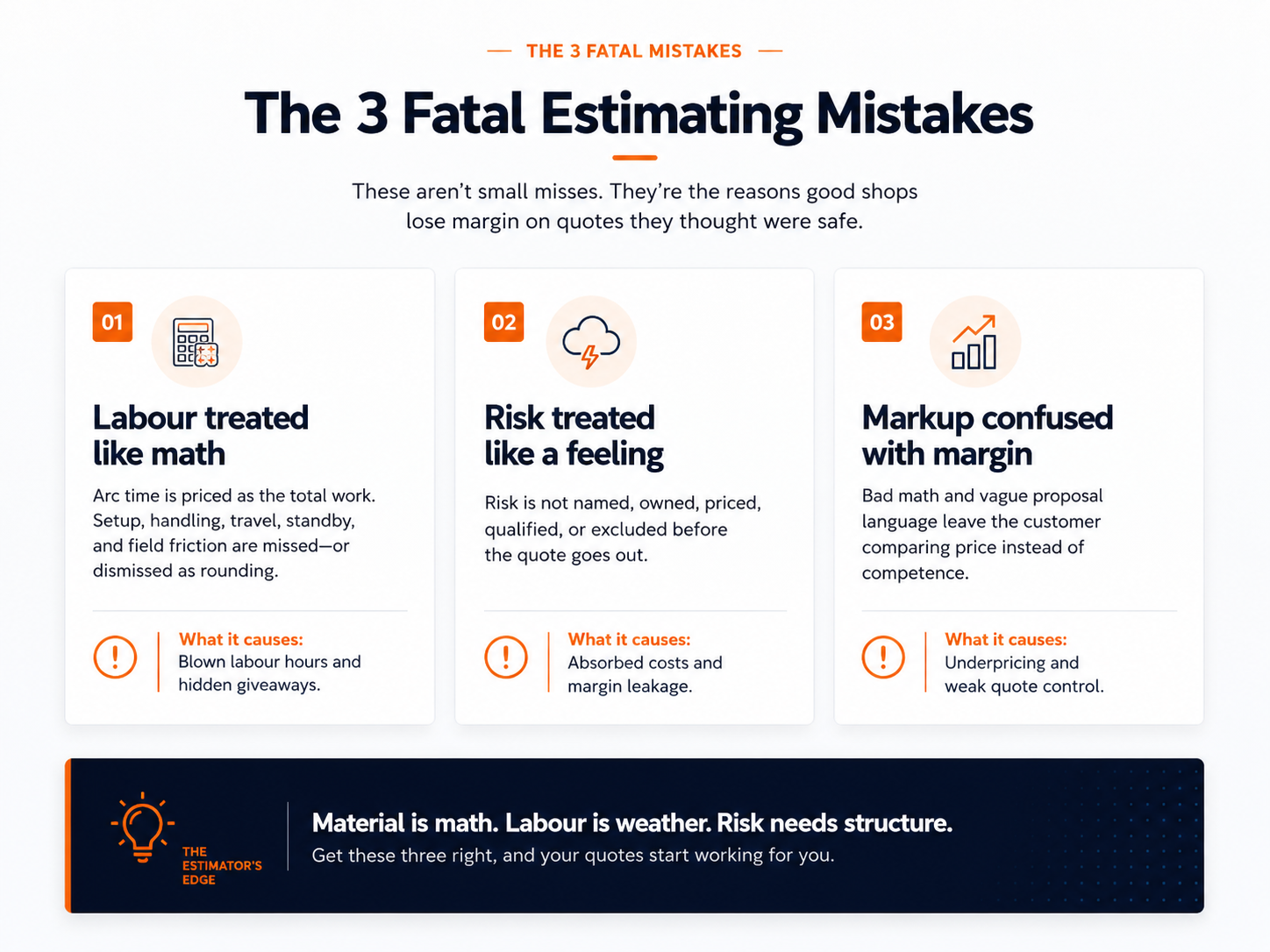
That said, if your company is bleeding EBITDA right now, it is usually happening because of three major estimating failures.
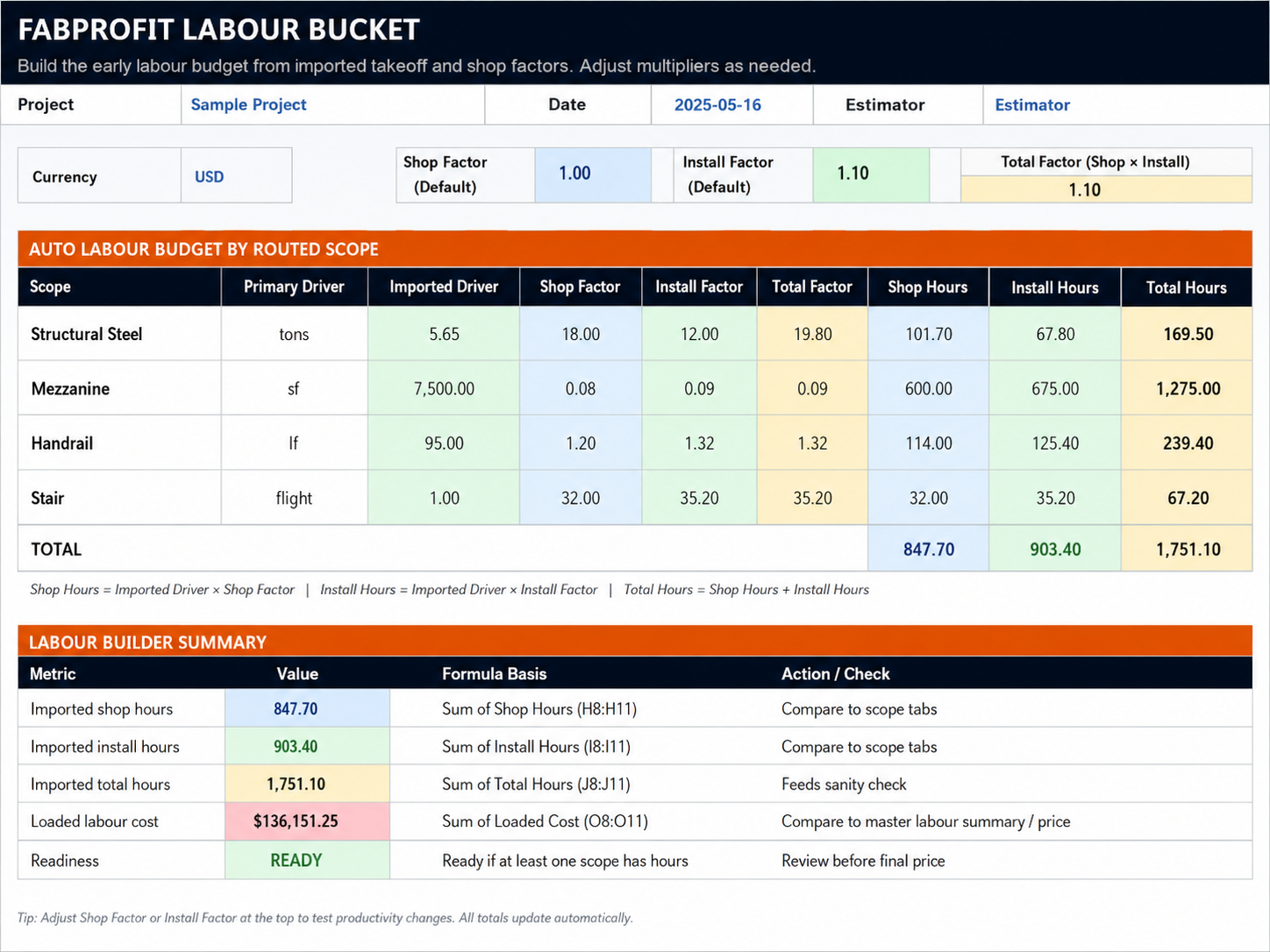
First, your team is misunderstanding labour. The biggest problem is the massive disconnect between the estimating desk and the actual work. Too often, estimators are staring at drawings that show a perfect finished product, and pricing a perfect world, having no idea what actually happens on the shop floor or on a job site. In fabrication, material is math, but labour is weather. A weld might take 20 minutes of pure arc time on paper, but what about the reality? What about the crane setup? The forklift movement? Travel and mobilize time? The fitter trying to wrestle a warped plate? The site standby? If your estimators are treating arc time like floor time, they aren't predicting human work, they are just guessing. And you are giving your labor away for free.
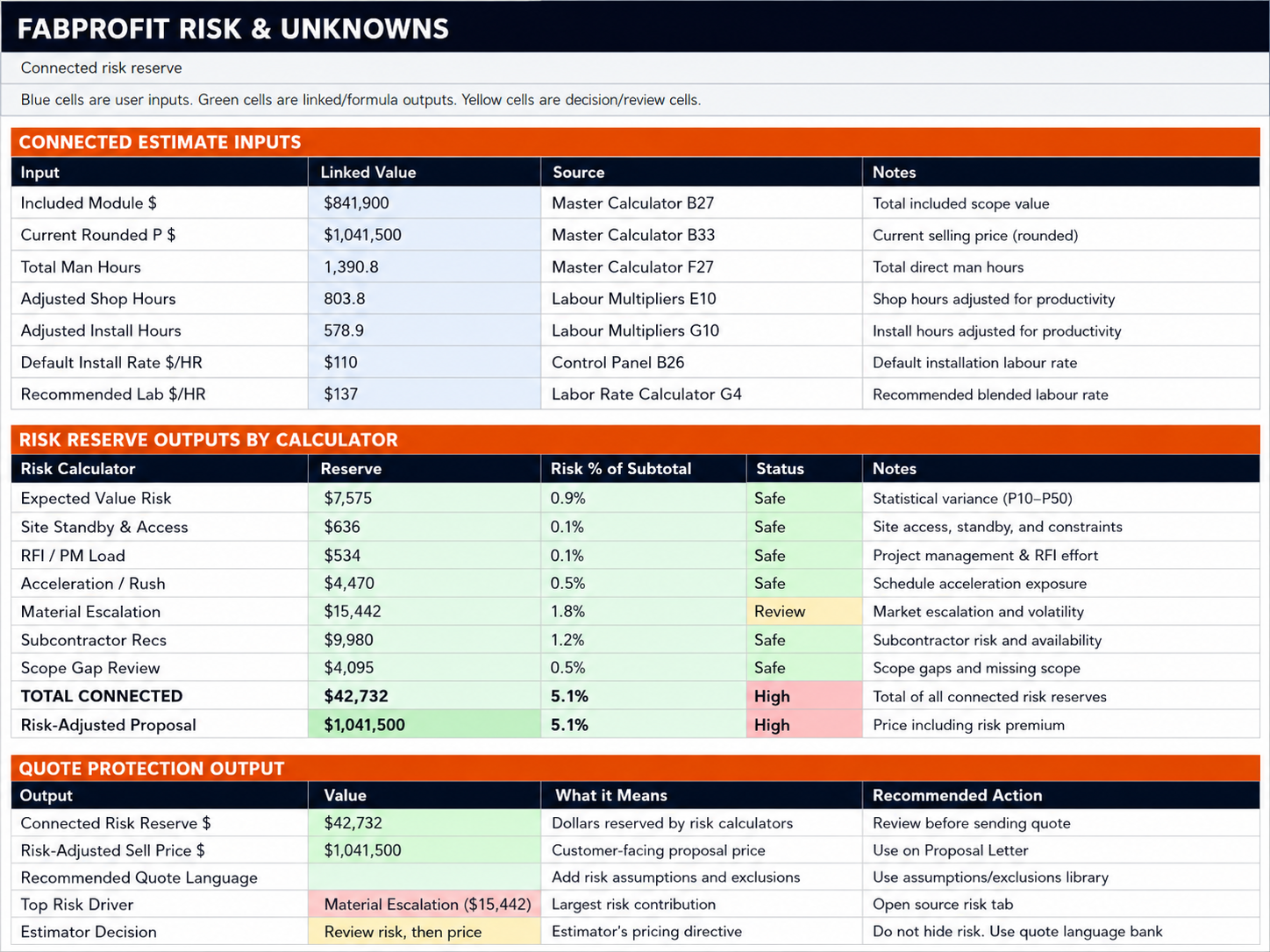
Second, they are treating risk like a feeling instead of a structure. Hope is not a business strategy. An estimate is not just a cost calculation; it is a risk decision. If your team isn't naming the risk, deciding who owns it, and explicitly pricing it, qualifying it, or excluding it before the quote goes out, the shop will end up absorbing the cost when reality shows up.
And third, they’re confusing markup with margin, a mistake that drains your bottom line before the job even starts. A quote is not just a price tag; it is a risk-control document. If your proposal is vague, you've handed the customer a blank check to compare you on price alone. But if you draw a clear fence around the job with precise assumptions and exclusions, you’re doing something better: you’re forcing them to compare you on competence. Don't fight for the bottom. Fight to be the most competent shop in the room.
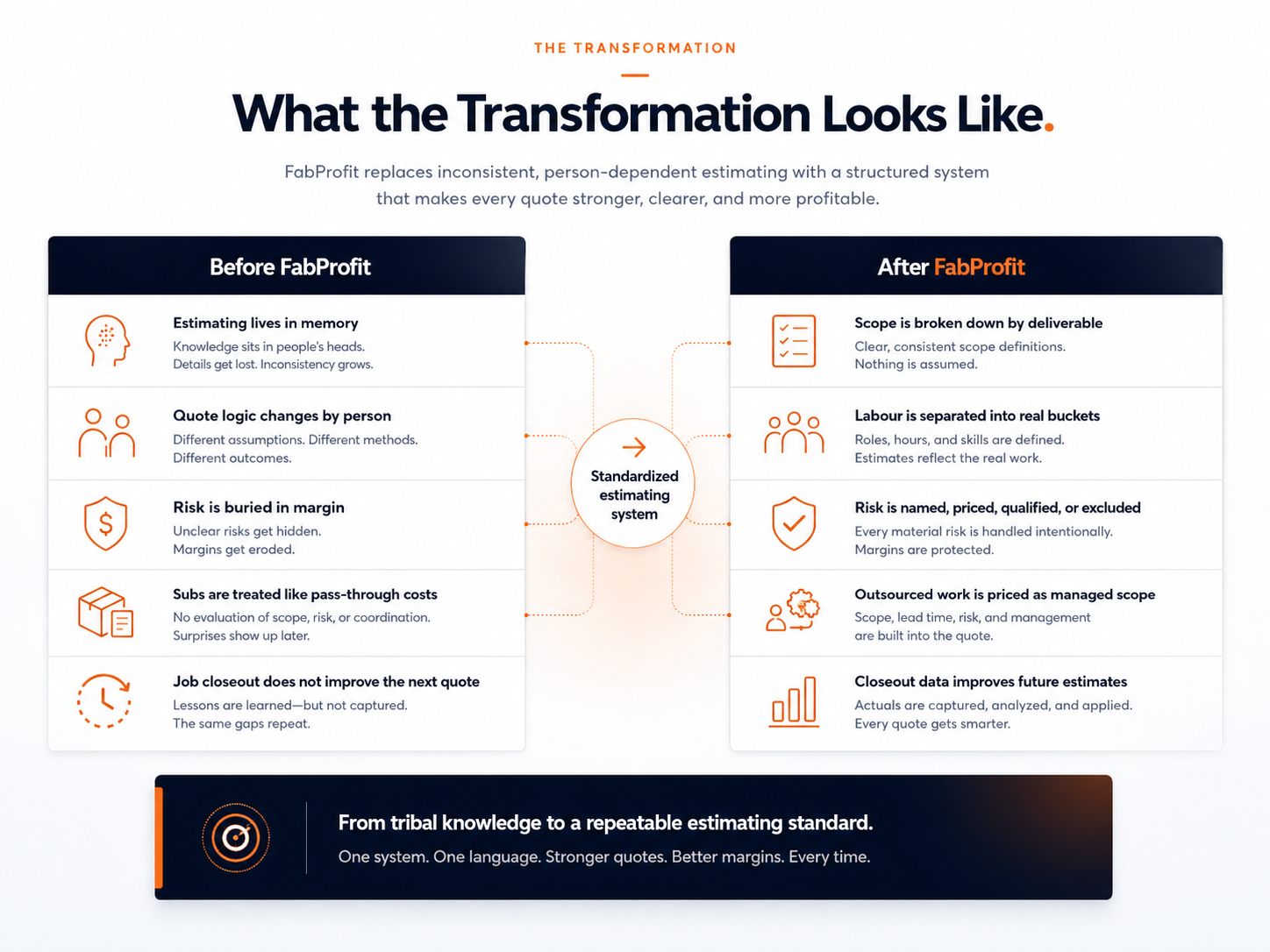
Now, your senior estimator probably knows all of this. But when that knowledge is locked inside one guy's head, you don’t have a company estimating system. You have a massive key-person dependency.
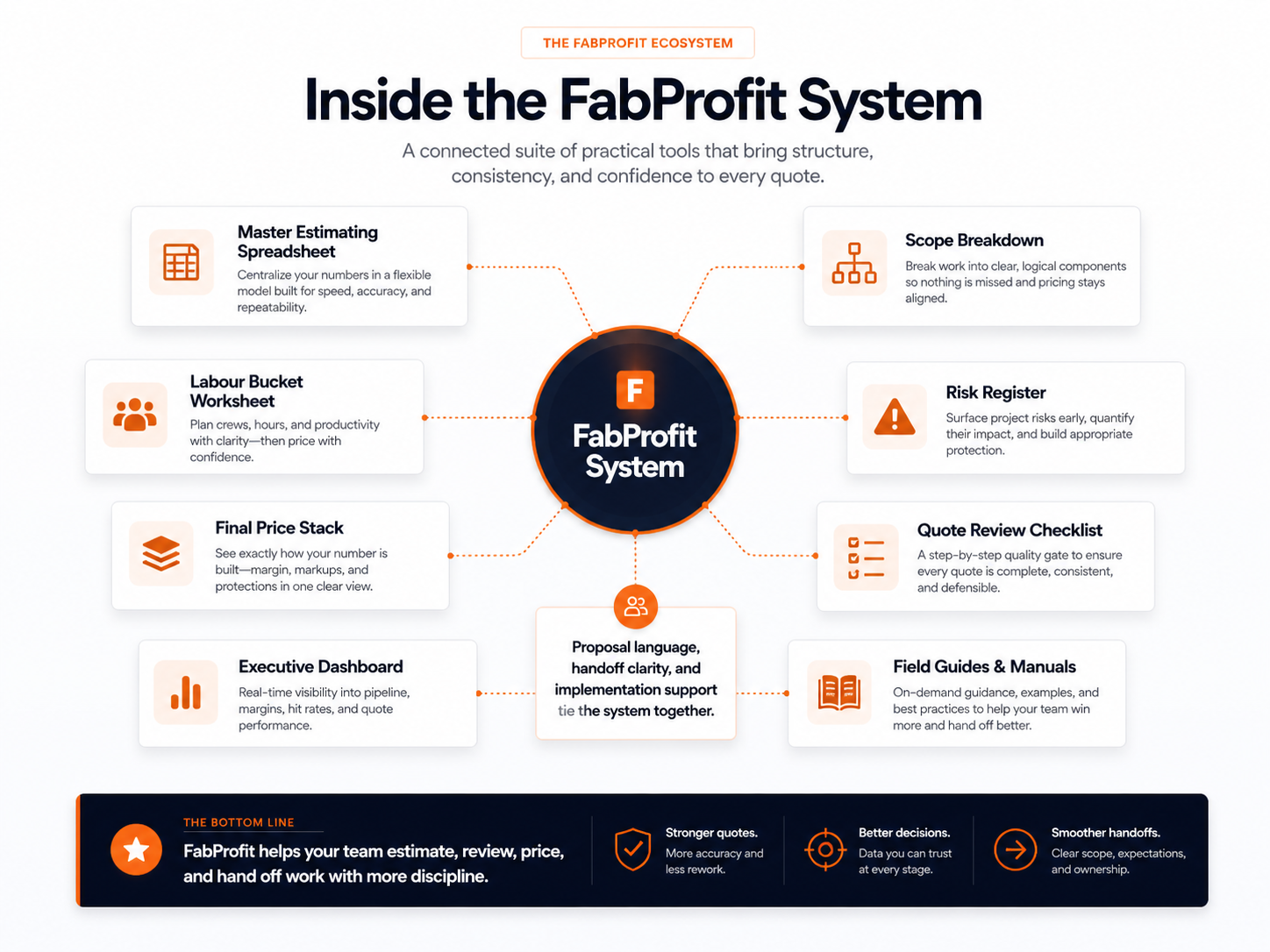
That is what the FabProfit System fixes. But this isn't just a pile of training videos. It is a complete operating infrastructure.
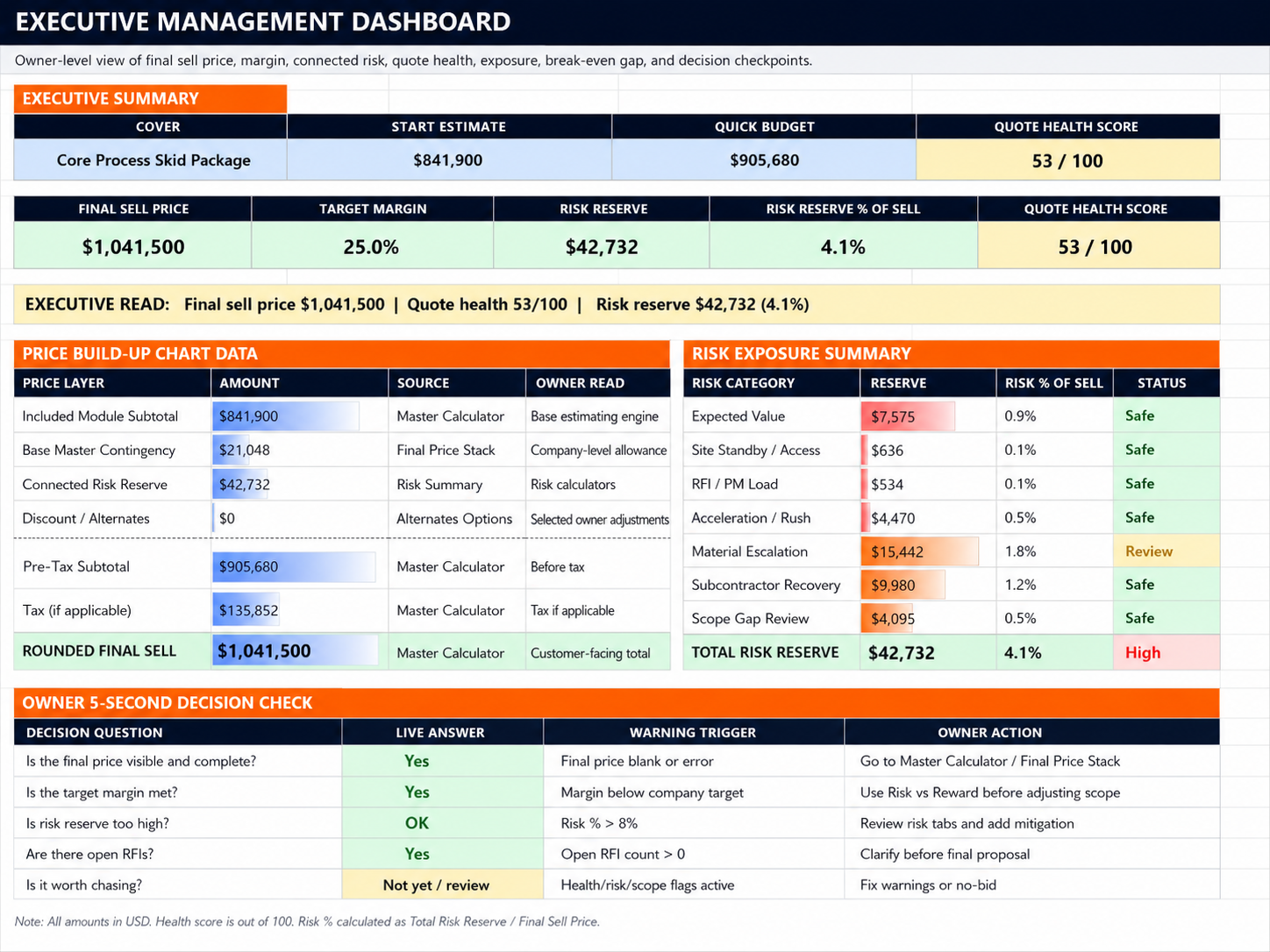
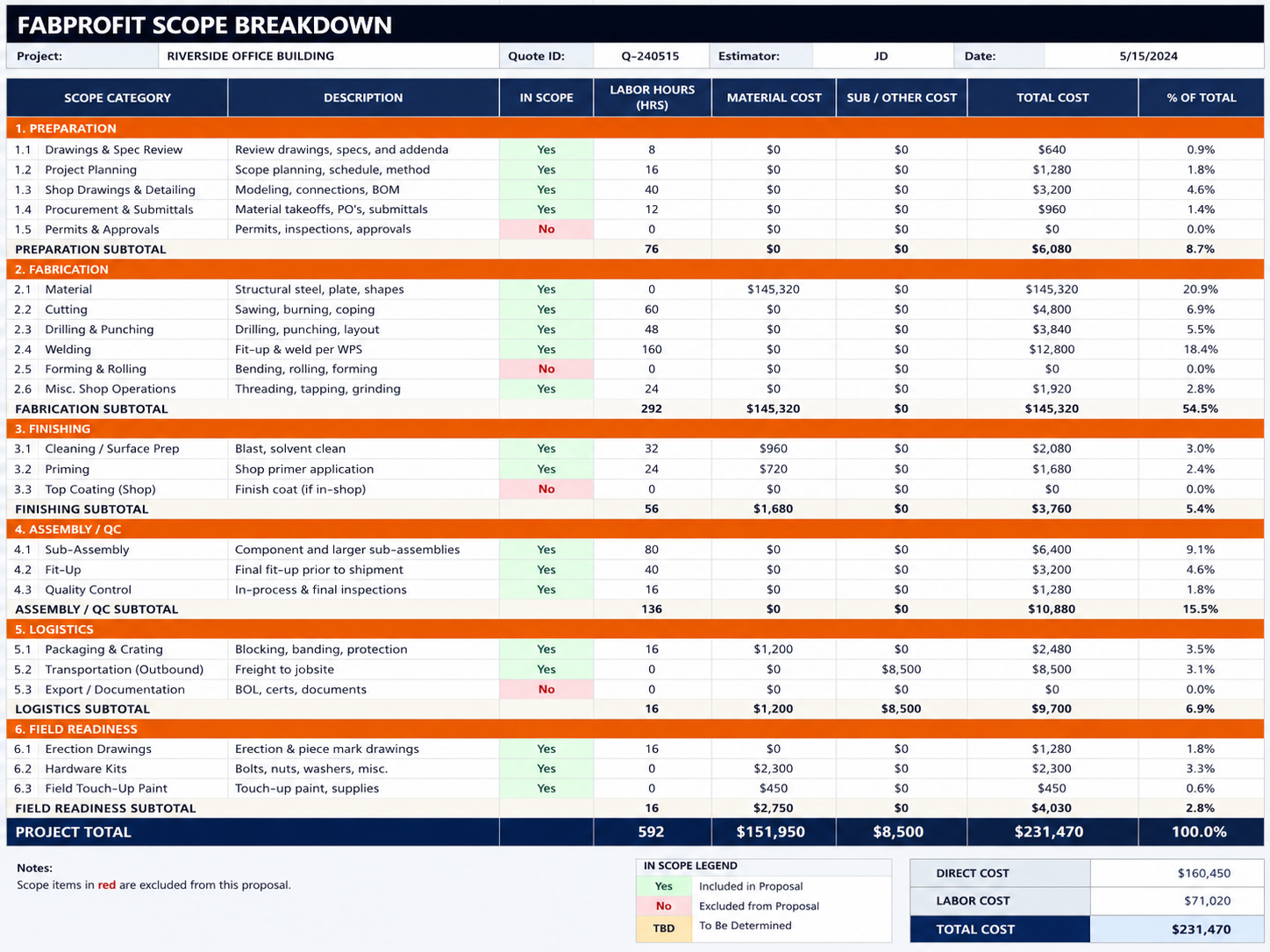
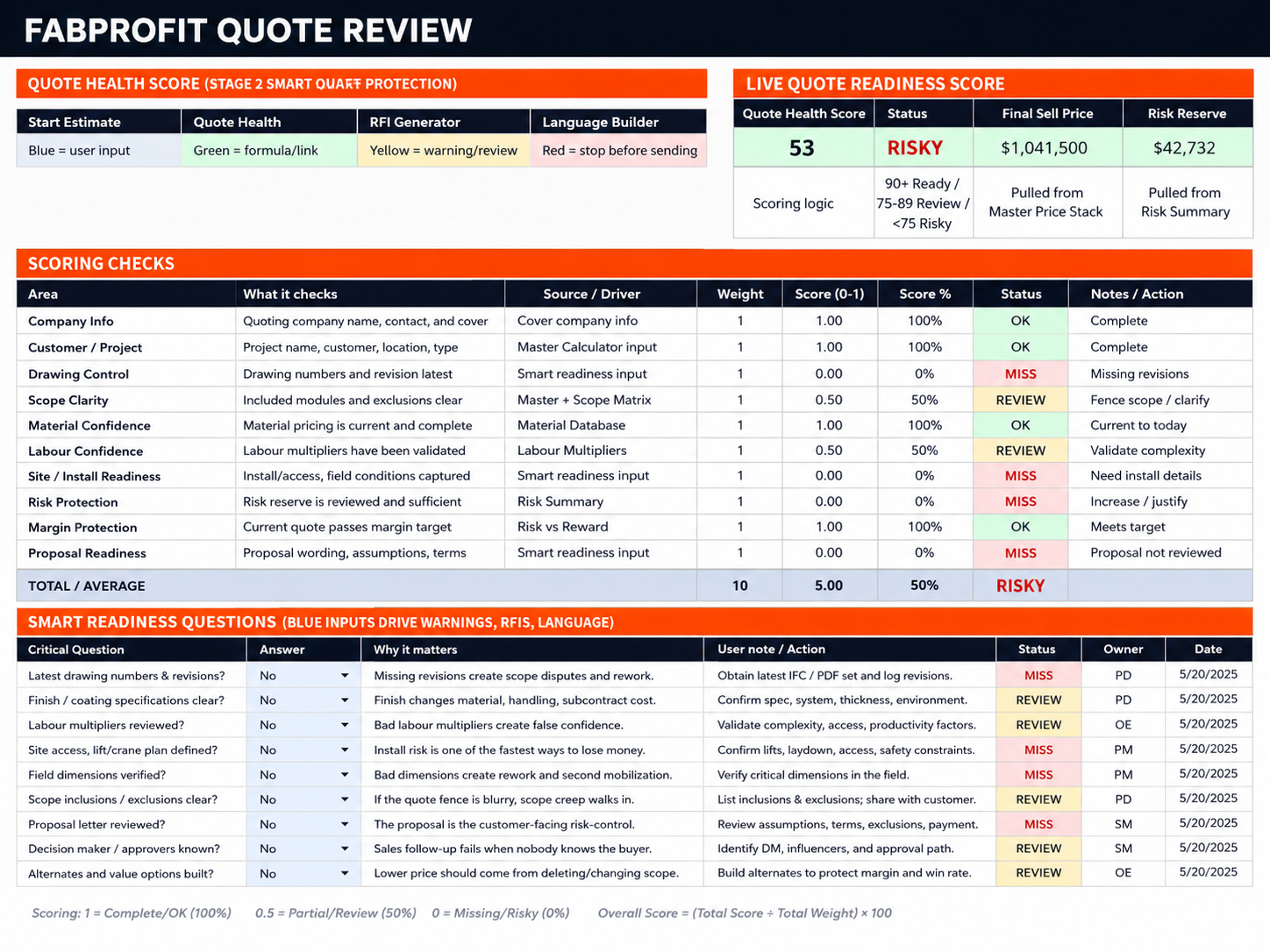
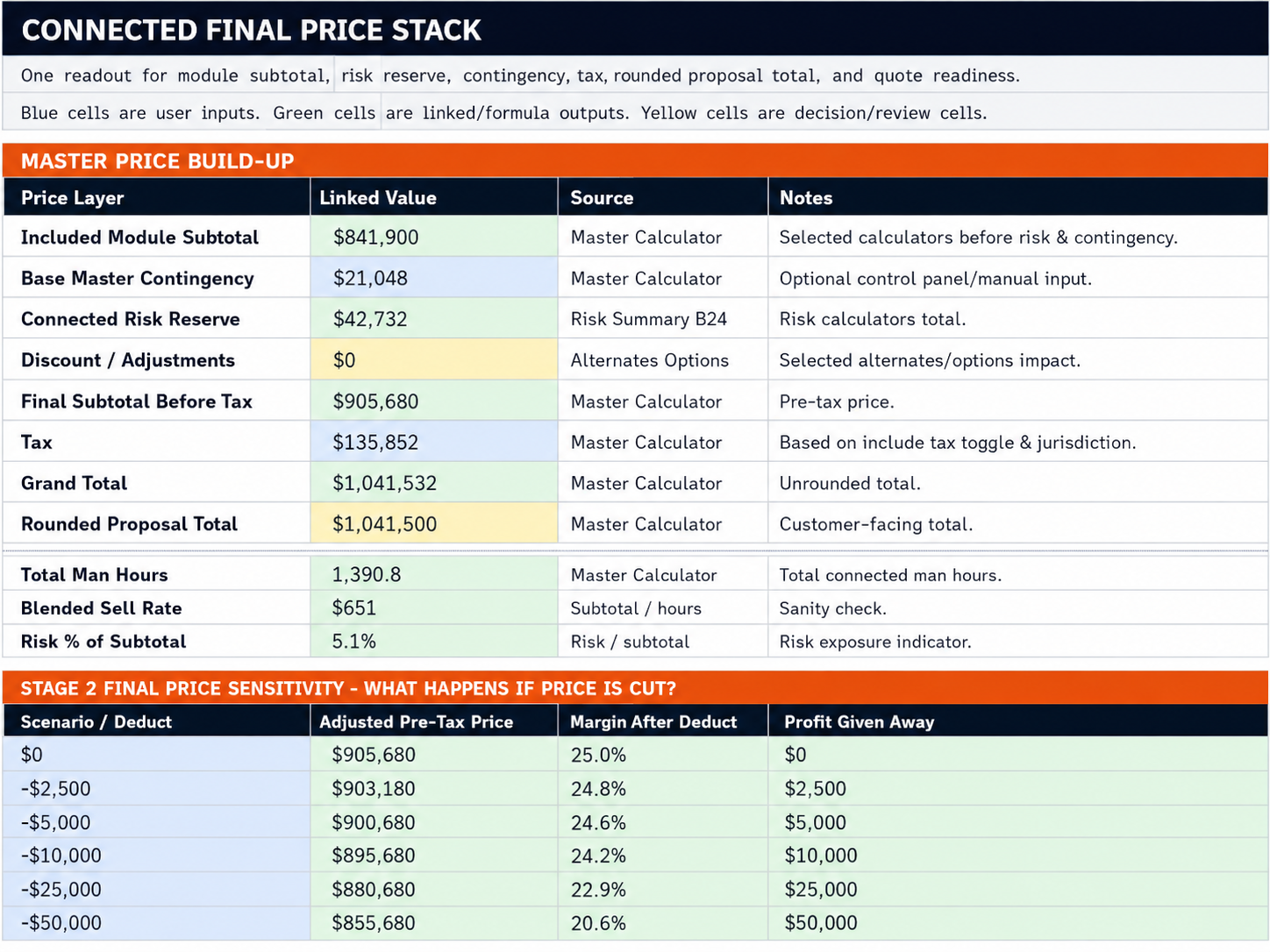
Along with the core training modules, you are getting my proprietary Master Estimating Spreadsheet suite. This is an absolute beast of an engine. It includes automated Takeoff Imports, a live Material Database, a Quote Health Score that warns you if your bid is too risky, and an Auto-RFI Generator that automatically drafts questions for your customer based on missing scope. It even auto-builds the legal language for your proposal letters.
Because of this specific toolset, companies are actually cutting their quoting time in half. You save 50 percent of your actual quote time because the spreadsheets do the heavy lifting, allowing your estimators to focus on strategy instead of data entry, or doing more quotes.
To back that up, your team also gets two manuals. The first is the Estimator's Profit Protection Field Guide, which gives your team instant access to steel sizing, buyout math, and risk treatment formulas. The second is the Fabricator's Sales Cheat Sheet, which trains your estimators on how to follow up, ask better questions, and close more quotes without ever having to act like a pushy salesperson.
And if you are sitting there thinking, "Greg, we just spent $200,000 on a new ERP system to handle this," you need to hear this reality check. Industry data shows that over 70 percent of recently implemented ERP systems fail to fully meet their original business goals.
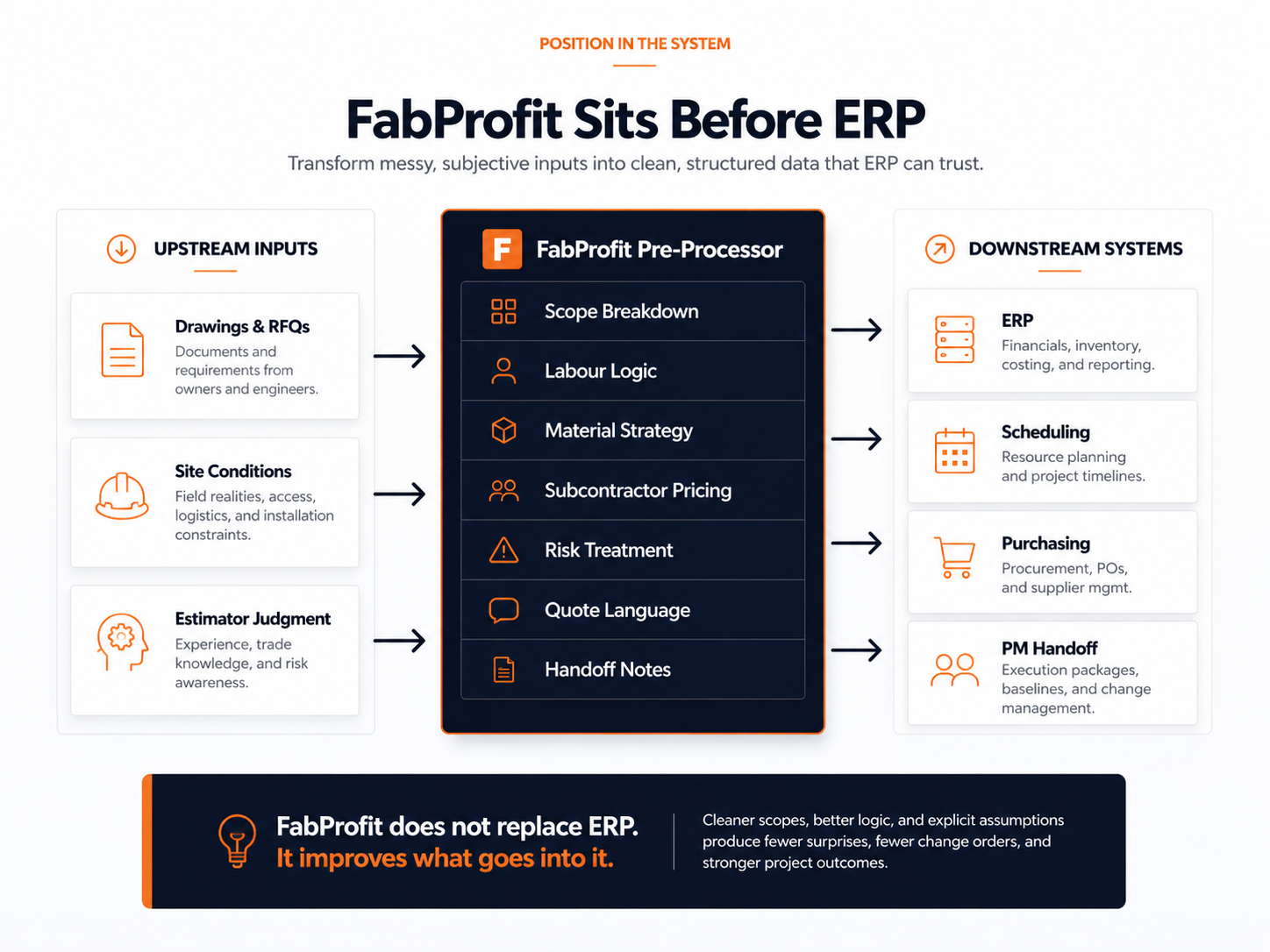
Why? Because an ERP is a database, not a crystal ball. It only computes the assumptions you feed it. If your estimator feeds your new ERP bad routing times or misses the field mobilization costs, your expensive software is just going to schedule your mistakes faster. It is garbage in, garbage out.
The FabProfit System doesn't replace your ERP. It acts as the intelligent pre-processor. It gives your entire team the tools to handle the messy risk analysis, the handling logic, and the true labor calculations before that data ever hits your final system.
Right now, I am opening up the FabProfit System to a Charter Group of just 25 forward-thinking fabrication companies. Because I am going to be working closely with this initial cohort to ensure their teams adopt the system and map their takeoff data flawlessly, I have to cap it at 25 spots.
This Charter License window is closing soon; you can see the exact deadline date right below this video. After that deadline passes, or the 25 spots are filled, the price permanently shifts to our standard enterprise rate.
Right below this video, you will see two buttons.
If you are ready to claim your spot in this cohort before it fills up, click the button to apply for the Charter License right now.
But if you want to look at your own math first, click the other button to run the Baseline Efficiency Calculator. It takes about three minutes to fill out. Let the math show you exactly what your current, undocumented quoting process is costing you.
Either way, the window to get in on this Charter Group is closing. Check the date below, pick a button, and let's get to work fixing your estimating process.
I will see you on the inside.